The Artist's Way in 12 weeks: a short guide
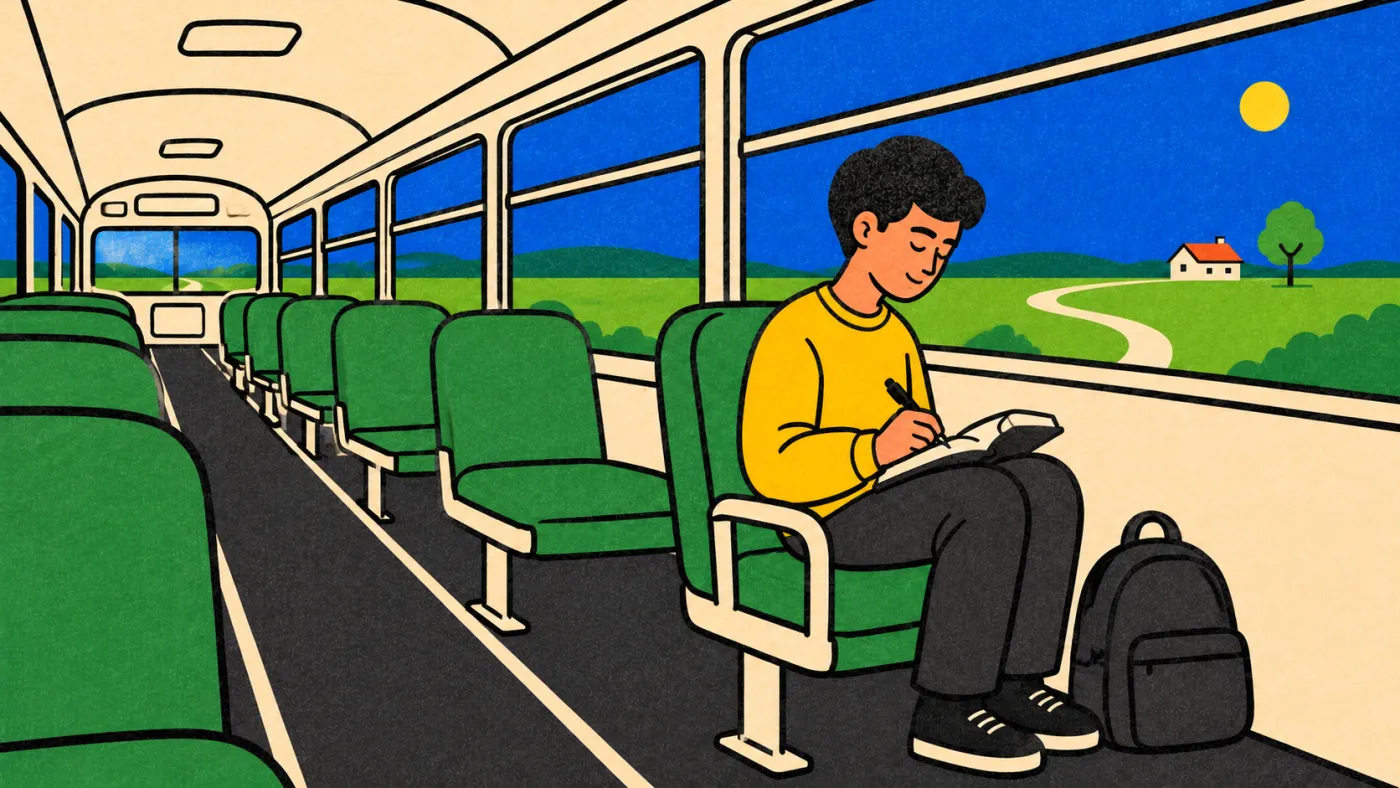
The Artist's Way is a book by Julia Cameron, first published in 1992. Most people know it for morning pages, but the book is a twelve-week course, and the pages are only one part of it. This guide explains how the course is built so you know what you're signing up for. It doesn't replace the book: the essays, exercises and tasks are Cameron's, and they're worth reading in her words.
Who it's for
Cameron wrote for people who feel creatively blocked: writers who stopped writing, painters who no longer paint, and people who always wanted to make something but never let themselves try. Over the years the audience widened. People work through the course during career changes, after burnout, or simply to see what happens when they pay attention to themselves for three months.
You don't need to call yourself an artist. Cameron's idea is that creativity is a normal part of being human, and that most blocks come from fear, old criticism and habit, not from a lack of talent.
The two basic tools
The whole course rests on two practices that you keep up every week.
Morning pages. Three pages written first thing in the morning, by hand in Cameron's version, in one go. You don't stop, edit or judge them, and you don't show them to anyone. On a keyboard that's about 750 words. Our guide to morning pages covers the rules in detail.
The artist date. Once a week, you spend an hour or two alone doing something that interests or delights you: a museum, a walk through a part of town you don't know, a shop full of old maps, a film by yourself. It's a date, so you go alone and you plan it ahead of time. Cameron describes morning pages as sending and the artist date as receiving: one clears space, the other fills it.
Before the first week, Cameron asks you to commit to the course, including both tools, for the full twelve weeks.
The twelve weeks
Each chapter covers one week and focuses on recovering a particular sense. The chapter titles follow the pattern "Recovering a Sense of…":
| Week | Theme |
|---|---|
| 1 | Safety |
| 2 | Identity |
| 3 | Power |
| 4 | Integrity |
| 5 | Possibility |
| 6 | Abundance |
| 7 | Connection |
| 8 | Strength |
| 9 | Compassion |
| 10 | Self-protection |
| 11 | Autonomy |
| 12 | Faith |
Roughly speaking, the first weeks deal with what holds you back: old criticism, the voices that told you art wasn't for you, and the people around you who don't support your work. The middle weeks turn to what you want, what you allow yourself, and how you treat money, time and your own limits. The last weeks are about protecting your creative life and trusting it enough to keep going after the course ends.
Each chapter has a short essay, a set of tasks to choose from, and a weekly check-in. The check-in asks simple questions: How many days did you write morning pages this week? Did you go on your artist date? Did anything else significant come up?
Week four is known for one unusual task: a week of reading deprivation, with no books or newspapers (today you'd add the feed on your phone). The aim is to stop filling your head with other people's words so you can notice your own. Many people find it the hardest week of the course.
How to work through it
Go at the book's pace. One chapter a week, read at the start of the week. Read ahead and the tasks pile up and lose their effect.
Don't skip the pages. The tasks vary from week to week, but morning pages run under all of them. If a week gets busy, keep the pages and do fewer tasks.
Do some tasks, not all. Each chapter offers more tasks than most people complete. Cameron is clear that you don't need to do every one. Pick the ones that make you a little uncomfortable.
Plan the artist date. It's the tool people drop first, because it looks like a luxury. Put it in your calendar like any other appointment.
Consider a group. Many people go through the book with a friend or a small group and meet once a week to talk about the tasks. It isn't necessary, but it helps you stay with it.
Morning pages after the twelve weeks
Many people keep writing morning pages long after they finish the course. By then the habit is formed, and the pages have become the part of the morning that's yours. Cameron also suggests rereading your pages, with a highlighter, after about eight weeks. Patterns you couldn't see day by day often show up: the same wish, the same complaint, the idea that kept coming back.
If you'd like to keep writing on screen instead of in a notebook, Out of My Head gives you one blank page a day. The menu fades after your first word and spellcheck is off, and a word count in the corner tells you when you've reached 750 words. If the morning is short, type /15 for a 15-minute timer. If you sit in front of a blank page and nothing comes, the app suggests a gentle first line. There are more of them in morning pages prompts.
The free plan covers daily writing, a day streak and the last seven days of pages. Pro keeps the full archive, with search, which helps when you reach the rereading stage. It also has prompt series for longer stretches.
Common questions
"Do I need the book?"
Yes, if you want to do the course. Morning pages on their own are easy to start from any guide, but the twelve weeks depend on Cameron's essays and tasks.
"Can I type morning pages instead of writing by hand?"
Cameron recommends writing by hand. Many people type because their hand can't keep up or because it hurts. Typing is better than not writing at all. If you type, protect what paper gives you for free: no distractions and no editing.
"What if I miss a day?"
Write the next day. Twelve weeks is long, and nobody gets through it without a gap. The check-in asks how many days you wrote, not whether you were perfect.
"Can I write in the evening?"
The method is built for mornings, but if mornings don't work, writing at night keeps the habit going. See evening pages.
Week one starts with a single page. You can write it this morning. Open a blank page →