Morning pages for ADHD: what helps and what to adjust
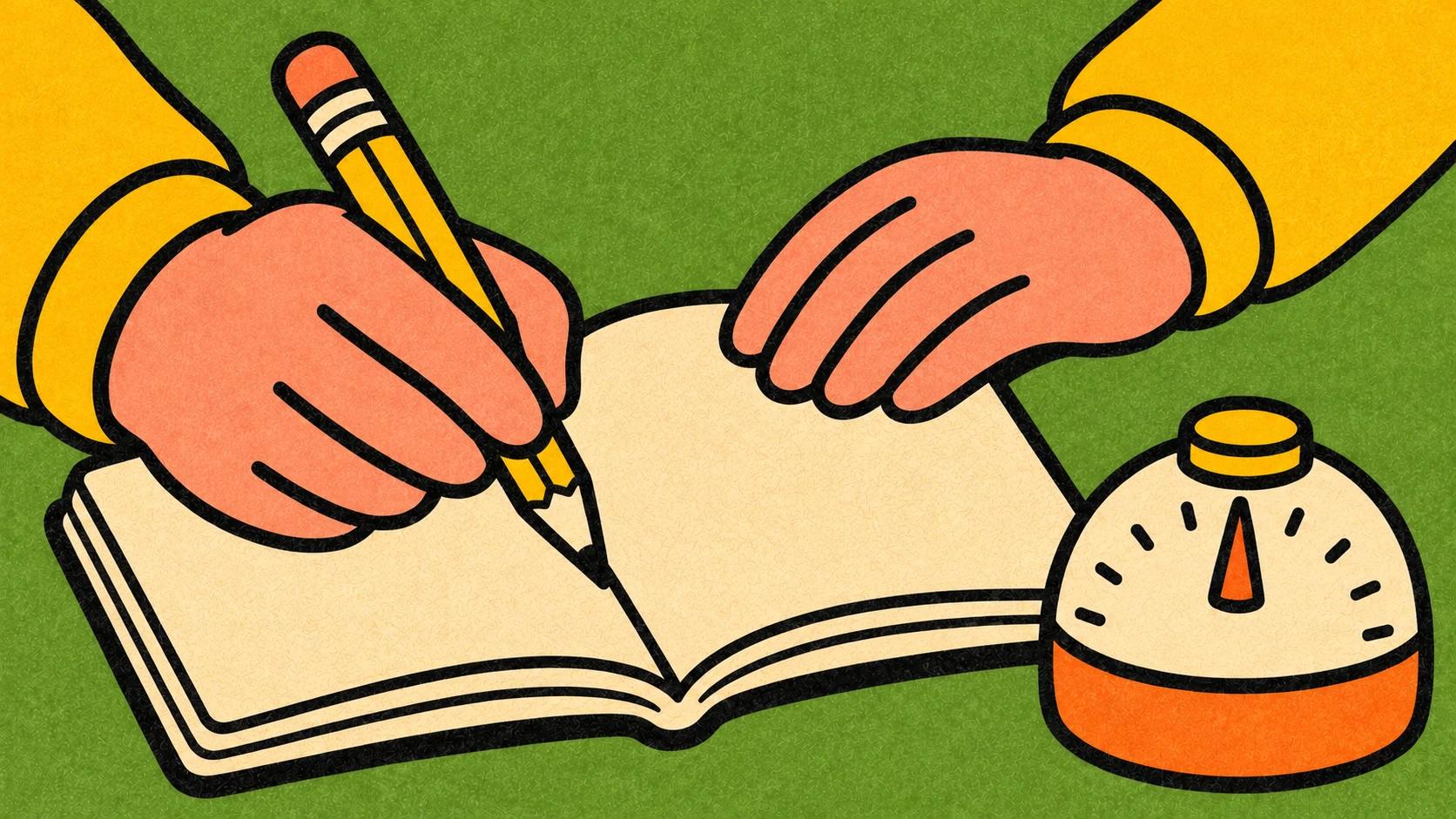
Three pages every morning is a lot to ask when routines don't stick. If you have ADHD and want to try morning pages, you can start with shorter sessions and choose a time that fits your day.
This is a practical guide, not medical advice. Morning pages aren't a treatment for ADHD, and they don't replace diagnosis, medication or support from a professional. It's a writing habit, and some people use it to get scattered thoughts onto one page.
What you might find useful
You can move between subjects without putting your thoughts in order or finishing every sentence. That may make starting easier if you tend to put writing off because you want to do it properly.
You can also note ideas and tasks you remember while writing. Our guide to brain dumps covers how to sort that afterwards.
What tends to trip people up
- Three pages feels like a wall. The length alone can stop you from starting.
- "First thing in the morning" may not exist. Mornings can be chaotic, and routines tied to a time of day break easily.
- A missed day feels like failure. Then the whole habit gets dropped.
- A blank page is hard to begin. Getting going is often the hardest step.
Adjustments that can help
Use a timer, not a page count. With ten minutes, you know when you'll be finished. In Out of My Head, type /10 at the start of a line to start the timer. When it ends, you're done, however much you wrote.
Let "morning" mean "when I first sit down." If you're up at noon, that's your morning. The pages work in the evening too: see evening pages.
Start with a borrowed first line. Opening a blank page in the app shows a greyed-out first line. Press Tab to use it, or ask for another. More are in our list of prompts.
Reduce distractions. The app hides its menu once you start typing. Spellcheck is off by default, so nothing underlines your sentences.
Pair it with something you already do. Try writing after making tea or brushing your teeth. An existing routine can help you remember to sit down.
Resume after a missed day without catching up. The app shows a day streak, and on the Pro plan there's streak protection for one day off in seven. If you miss a day, write a short page the next day and carry on.
Turn a stray task into a checkbox. If you remember something mid-page, type [] at the start of a line. It becomes a task you can tick off later, and you can keep writing.
What to expect
You might not notice a difference after the first week. Over time, you may recognise recurring subjects: a task you keep putting off, a worry or an idea. If writing helps you spot them, keep going.
Some days you'll repeat yourself or jump between subjects. You can leave those entries as they are. Julia Cameron suggests writing "I don't know what to write" when nothing comes. Your hand keeps moving, and something else usually follows.
When to get support
If focus, mood or anxiety are getting in the way of work, sleep or relationships, talk to a doctor or psychologist. You can keep writing while you get that help. If you're also dealing with anxiety, see morning pages for anxiety.
A small plan for the first week
- Pick a moment after something you already do, such as making tea.
- Set a ten-minute timer.
- Start with a borrowed first line.
- Write whatever comes, including mess and repeats.
- Stop when the timer ends.
- If you miss a day, write a short page the next day and carry on.
Try ten minutes of writing to begin with. Open a blank page →